I still see people balancing their phone on their lap while following Google Maps directions, glancing down every few seconds. It’s genuinely dangerous, and honestly, a decent car phone holder costs less than a single traffic fine for phone use while driving. There’s really no good excuse to skip this one.
Beyond the safety angle, a proper mount just makes navigation and hands-free calls way less annoying during daily commutes.
Why a Phone Holder Isn’t Optional Anymore
Car phone holder mounts keep your device visible and accessible without requiring you to hold it, which matters both for legal reasons (using a handheld phone while driving is a punishable offense under the Motor Vehicles Act) and basic road safety.
Most of us rely on our phones constantly for navigation now, replacing dedicated GPS units entirely. A stable mount at eye level means quick glances instead of dangerous extended looks down at your lap.
Mounting Types: Which One Fits Your Dashboard
Quick answer: Dashboard mounts offer the most stable, close-to-eye-level view. Air vent mounts are easy to install but can block airflow. Windshield mounts provide flexible positioning but face legal restrictions in some areas regarding obstruction of view.
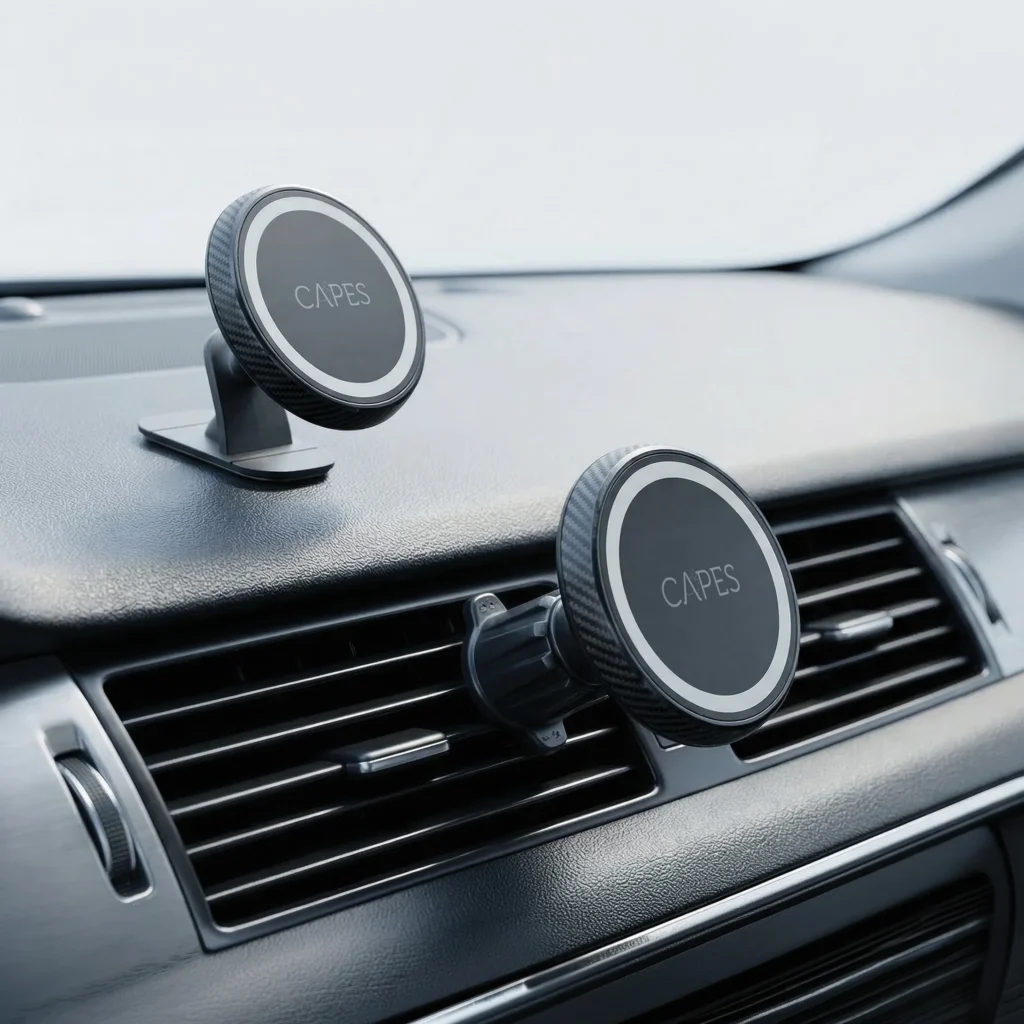
- Dashboard mount: Sticks to the dash surface, generally the most stable option for rough roads
- Air vent mount: Clips onto AC vent fins, quick to install and remove, though heavier phones can sometimes cause vent fins to sag over time
- Windshield mount: Suction cup attachment, offers flexible height adjustment but check local regulations on windshield obstruction
- CD slot mount: Uses the car’s CD player slot (for older cars), surprisingly stable but obviously only works if you have one
Grip Mechanism: Clamp vs Magnetic vs Gravity
Clamp-style holders use spring-loaded arms to grip your phone securely — reliable but slightly slower to insert/remove your phone each time. Magnetic mounts need a metal plate stuck to your phone case, offering the fastest attach/detach experience, though some users worry (largely unnecessarily with modern magnets) about interference with wireless charging or card data.
Gravity mounts clamp automatically using the phone’s own weight when placed in the holder — convenient, but generally best suited to lighter phones without bulky cases.
Stability on Rough Roads
This matters a lot more in India than it might elsewhere, frankly. Potholes and rough patches are common, and a cheap holder will have your phone bouncing or slipping within weeks. Look specifically for holders with rubber-lined grips and a solid base attachment rather than just adhesive pads that weaken over time.
Quick answer: For rough Indian road conditions, choose phone holders with reinforced clamps and rubberized grip padding rather than basic suction cups, which tend to lose adhesion over repeated bumps and temperature changes.
[link to related guide on best dash cams here]
Wireless Charging Mount Options
Combining a phone holder with wireless charging is genuinely convenient — no cable clutter, and your phone stays topped up during long drives with navigation running (which drains battery fast). Make sure the mount’s charging coil aligns properly with your specific phone model, as misalignment reduces charging efficiency significantly.
Adjustability and Viewing Angle
A good holder should let you rotate the phone between portrait and landscape, and adjust height/angle to match your line of sight without significant eye movement away from the road. Test this in-store if possible, or check demonstration videos online before buying, since cheap holders often have limited or stiff adjustment joints that loosen with use.
[link to related article on car accessories checklist here]
Compatibility With Different Phone Sizes
If you’re planning to upgrade phones in the next year or two, choose an adjustable clamp holder rather than a fixed-size one. Universal clamp holders typically accommodate phones from 4 to 7 inches, covering most current smartphone sizes including larger phones with protective cases.
Budget vs Premium Options
Basic clamp mounts start around Rs. 300-600 and work fine for occasional use. Mid-range options (Rs. 800-1,500) usually add better stability and one-hand operation features. Premium wireless charging mounts run Rs. 1,500-3,000+ but eliminate cable clutter entirely and often include auto-clamping sensors.
FAQ
Are magnetic phone mounts safe for my phone? Yes, modern magnetic mounts use magnets that don’t interfere with phone electronics or wireless charging in any meaningful way, contrary to older concerns.
Is it legal to mount my phone on the windshield in India? Regulations vary by state, and some restrict mounting directly in the driver’s direct line of sight. A dashboard or lower windshield corner placement is generally safer to avoid obstruction issues.
Will an air vent mount damage my car’s AC vents? Lightweight phones generally cause no issue, but heavier phones with thick cases can strain vent fins over months of daily use, so check the mount’s weight rating first.
Can I use a phone holder with wireless charging and a thick protective case? Most wireless charging mounts work through cases up to 3-5mm thick, though very rugged or battery cases may reduce charging efficiency or block alignment entirely.
How do I clean adhesive residue if I want to remove a mount? A bit of rubbing alcohol on a cloth usually removes leftover adhesive residue from dashboard or windshield surfaces without damaging the finish.
Conclusion
Getting the best car phone holder for your needs really comes down to matching the mount type to your dashboard setup and driving conditions. Whether you go with a simple clamp mount or a premium wireless charging option, the real win is keeping your eyes closer to the road and your hands on the wheel where they belong. It’s a small purchase that pays off every single drive.