You know that slightly annoying feeling when your car seems to drift to one side even though you’re holding the steering wheel straight? That’s usually one of the first wheel alignment symptoms people notice, and honestly, a lot of drivers just live with it for months without realizing what’s causing it.
Bad alignment isn’t just a minor annoyance. It eats into your tyre life, hurts fuel efficiency, and in some cases affects handling enough to become a genuine safety concern. Let’s go through the actual signs and what causes them.
What Wheel Alignment Actually Means
Alignment refers to adjusting the angles of your wheels so they’re set to the manufacturer’s specifications — camber, caster, and toe angles, if you want the technical terms. When these angles are off, even slightly, your tyres don’t sit flush on the road the way they should.
Quick answer: Wheel alignment adjusts your wheels’ angles to match manufacturer specs. Misalignment causes uneven tyre wear, steering pull, and reduced fuel efficiency, even if the car still drives normally at first glance.
Your Car Pulls to One Side
This is probably the most common sign people notice. If you’re driving straight on a flat road and have to constantly correct the steering because the car drifts left or right, that’s a strong indicator your alignment is off.
To test this properly, find an empty, flat stretch of road, hold the wheel loosely straight, and see which way the car naturally drifts. Don’t confuse this with road camber though — some roads are genuinely tilted for drainage, which can mimic this symptom.
Uneven or Rapid Tyre Wear
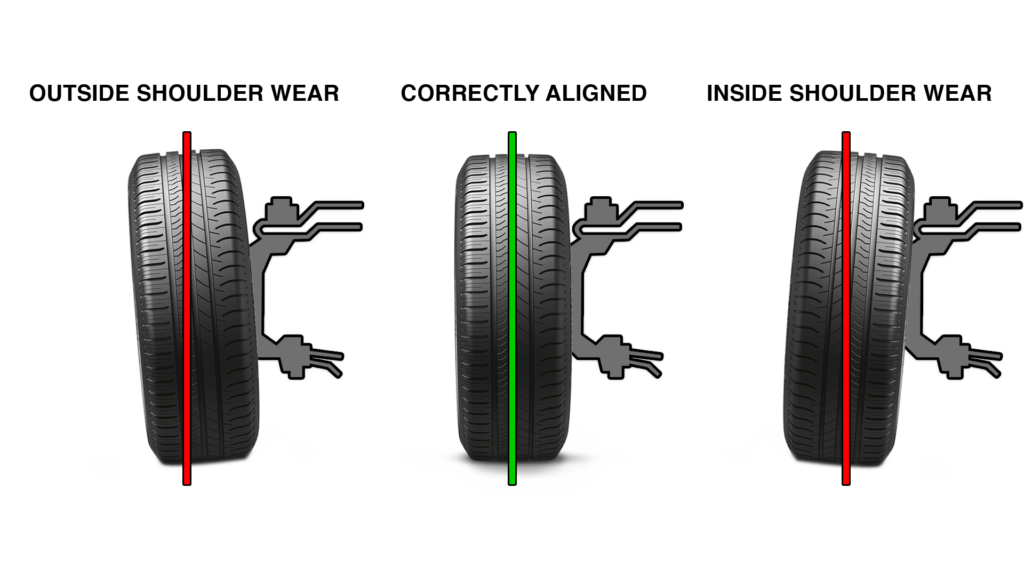
Check your tyres regularly, running your hand across the tread. If one side of a tyre feels noticeably more worn than the other, or if you’re needing new tyres way sooner than expected (say, under 25,000 km instead of the usual 40,000+), alignment is likely the culprit.
- Inner edge wearing faster: often indicates negative camber issues
- Outer edge wearing faster: often positive camber or toe misalignment
- Feathered/scalloped wear pattern: usually a toe alignment problem
Steering Wheel Off-Center While Driving Straight
If your steering wheel sits crooked — say tilted slightly to the left — even when the car is going perfectly straight, that’s a clear alignment red flag. This one’s easy to spot and doesn’t need any special test; you just notice it every time you drive.
[link to related guide on car maintenance checklist here]
Vibration in the Steering Wheel
Quick answer: Steering wheel vibration, especially at highway speeds, can indicate alignment issues, unbalanced tyres, or worn suspension components. Get it checked promptly since prolonged vibration accelerates wear on multiple parts simultaneously.
This symptom is a bit trickier because it overlaps with a few other issues — unbalanced wheels or worn suspension bushings can cause similar vibration. A proper diagnostic at a service center will tell you exactly which one it is.
Squealing Tyres on Turns
If your tyres squeal even during gentle, normal turns (not aggressive cornering), it often points to alignment problems causing uneven contact with the road surface. This is more noticeable in cars with lower-profile tyres.
What Causes Misalignment in the First Place
- Hitting potholes or curbs (extremely common on Indian roads, let’s be honest)
- Normal wear and loosening of suspension components over time
- Recent suspension or steering component replacement without a follow-up alignment
- Carrying heavy loads regularly, which stresses suspension geometry
- Minor accidents, even low-speed fender benders
I’ve noticed that after monsoon season especially, alignment issues spike — probably because of all the potholes that appear after heavy rain.
[link to related article on tyre maintenance tips here]
How Often Should You Get an Alignment Check
Most workshops recommend checking alignment every 10,000 km or once a year, whichever comes first. If you’ve recently hit a bad pothole hard or had any suspension work done, get it checked immediately rather than waiting for the scheduled interval.
The Cost of Ignoring Alignment Issues
A wheel alignment service typically costs Rs. 400-800 at most workshops. Compare that to the cost of prematurely replacing a set of tyres — easily Rs. 15,000-25,000 for a mid-size sedan — and it’s clear which is the smarter investment. Poor alignment also increases fuel consumption slightly due to added rolling resistance, which adds up over months of driving.
FAQ
How do I know the difference between wheel alignment and wheel balancing issues? Alignment affects how wheels angle relative to the road and causes pulling or uneven wear. Balancing addresses weight distribution around the tyre and typically causes vibration at specific speeds rather than constant pulling.
Can bad alignment damage my suspension? Over time, yes. Persistent misalignment puts uneven stress on suspension and steering components, accelerating their wear beyond normal expectations.
Is wheel alignment covered under standard car warranty? Usually not, since it’s considered routine maintenance related to road conditions and driving rather than a manufacturing defect.
Does alignment affect fuel efficiency? Yes, misaligned wheels increase rolling resistance, which means your engine works slightly harder to maintain speed, translating to marginally worse mileage.
Should I get alignment done after replacing just one tyre? It’s not strictly mandatory for a single tyre replacement, but if you’ve noticed any of the symptoms above, it’s a good time to get it checked anyway.
Conclusion
Catching wheel alignment symptoms early — pulling to one side, uneven tyre wear, a crooked steering wheel — saves you money on tyres and keeps your car handling the way it should. It’s a quick, inexpensive service compared to the alternative costs of ignoring it. If you’ve noticed any of these signs recently, it’s worth booking a check this week rather than putting it off.