Nothing ruins a summer drive faster than an AC blowing warm air when you desperately need it cold. And in most parts of India, once April hits, a weak AC isn’t just uncomfortable — it’s genuinely miserable. Proper car ac maintenance before the season peaks can save you from that exact situation.
I learned this the hard way a couple of years back, ignoring a slightly weaker AC through March, only to have it fail completely in the middle of May traffic. Not fun. Here’s what actually needs attention.
Why Car AC Systems Need Regular Maintenance
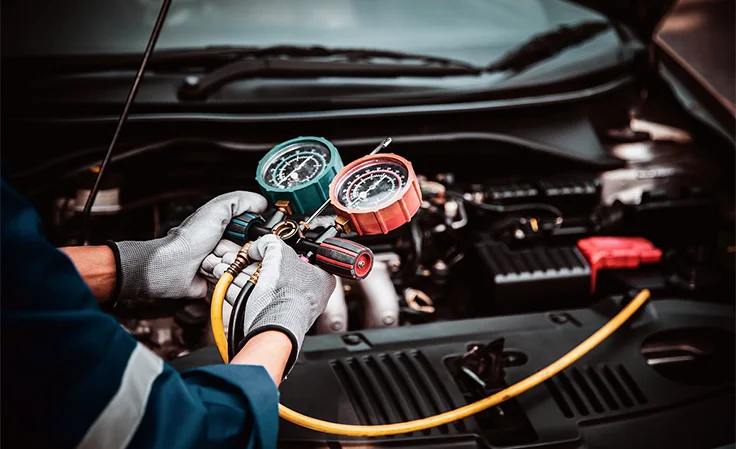
Car AC maintenance isn’t just about refilling refrigerant gas when it’s low — it involves the compressor, condenser, cabin filter, and the whole cooling circuit working together. Neglecting any one part reduces overall cooling efficiency, even if the others are fine.
Most people only think about their AC when it stops working entirely. But performance typically degrades gradually over months, which means you might not notice the slow decline until you’re stuck comparing it to how cold it used to blow.
Check Refrigerant Gas Levels
Low refrigerant is probably the most common reason for weak cooling. Unlike engine oil, AC gas doesn’t get “used up” through normal operation — a drop usually means there’s a slow leak somewhere in the system.
Quick answer: If your AC cools weakly despite the compressor running, low refrigerant gas is the likely cause. Get it checked and topped up at a service center, and ask them to check for leaks rather than just refilling repeatedly.
Clean or Replace the Cabin Air Filter
This one’s often overlooked entirely. The cabin filter traps dust, pollen, and pollution particles before air reaches your vents. A clogged filter restricts airflow significantly, making your AC work harder for less cooling output.
Most manufacturers recommend replacing the cabin filter every 10,000-15,000 km, though if you drive in heavily polluted city areas (Delhi NCR during winter smog season, for example), more frequent replacement makes sense.
Inspect the Condenser for Dirt and Debris
The condenser sits at the front of your car, right behind the grille, and it’s directly exposed to road dust, leaves, and bugs. A dirty condenser can’t dissipate heat efficiently, which directly impacts cooling performance.
- Visually inspect for visible dirt buildup or debris stuck in the fins
- Gently clean with a soft brush or low-pressure water spray, never high pressure
- Watch for bent fins, which restrict airflow even after cleaning
[link to related guide on engine oil change interval here]
Listen for Unusual Compressor Noises
A healthy AC compressor should run relatively quietly. If you hear grinding, rattling, or a loud clunk when you switch the AC on, that’s worth getting checked immediately rather than waiting — compressor repairs or replacements are among the costlier AC-related fixes, often Rs. 8,000-15,000 depending on the vehicle.
Check for Musty Smells From the Vents
Quick answer: A musty or moldy smell from AC vents usually indicates bacterial or fungal growth in the evaporator core, caused by trapped moisture. An AC disinfection service, typically costing Rs. 500-1,000, resolves this in most cases.
This isn’t just unpleasant — it can genuinely affect air quality inside the cabin, which matters more than people realize during long drives with kids or elderly passengers.
Get the AC Serviced Before Peak Summer
Don’t wait until March or April when every service center is booked solid with people whose AC just failed on the first hot day. Get a pre-summer check done in February — gas level check, filter inspection, and a general performance test. It’s a small proactive step that avoids the seasonal rush.
[link to related article on car maintenance checklist here]
Cabin Cooling Tips Beyond Just AC Servicing
- Park in shade whenever possible to reduce cabin heat buildup
- Use a sunshade on the windshield during long parking
- Crack windows slightly before starting AC to let hot trapped air escape faster
- Avoid recirculation mode for the first minute or two to flush out hot cabin air
- Get window tinting done (within legal VLT limits) to reduce heat absorption
How Much Does Full AC Servicing Typically Cost
A comprehensive AC service, including gas top-up, filter replacement, and general inspection, usually runs Rs. 1,500-3,000 depending on your city and vehicle type. Compare that to a full compressor replacement, and the routine maintenance route is clearly the more economical choice over the vehicle’s lifetime.
FAQ
How often should car AC gas be refilled? If there’s no leak, refrigerant shouldn’t need frequent refilling — a properly sealed system can go 2-3 years without needing a top-up. Frequent refills usually indicate an underlying leak that needs fixing.
Why does my AC smell bad when I first turn it on? This is typically due to moisture and bacterial buildup in the evaporator, especially common after periods of not using the AC. A quick disinfection service usually resolves it.
Can I service my car AC myself? Basic tasks like cleaning the cabin filter are doable at home, but refrigerant handling and compressor checks need proper equipment and should be left to trained technicians.
Does AC use affect fuel efficiency? Yes, running the AC does increase fuel consumption somewhat, generally estimated at 5-10% depending on driving conditions, though this is a normal trade-off for comfort.
What’s the ideal AC temperature setting for efficiency? Setting it around 22-24°C rather than the coldest setting reduces strain on the compressor while still keeping the cabin comfortably cool.
Conclusion
Staying on top of car ac maintenance before summer really pays off — a working AC isn’t a luxury in Indian summers, it’s close to a necessity. Get your filters checked, condenser cleaned, and gas levels verified before the temperature climbs past 40°C. A little attention in February saves you a very uncomfortable May.